
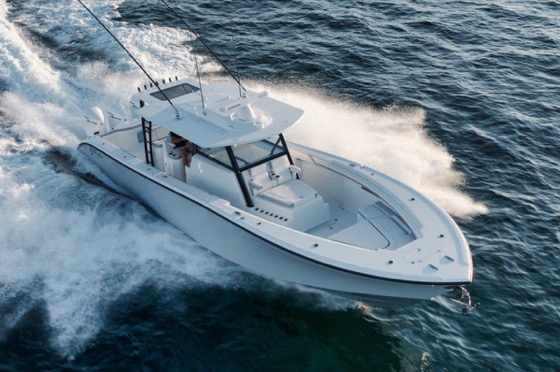
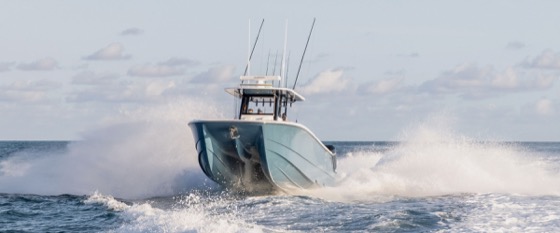
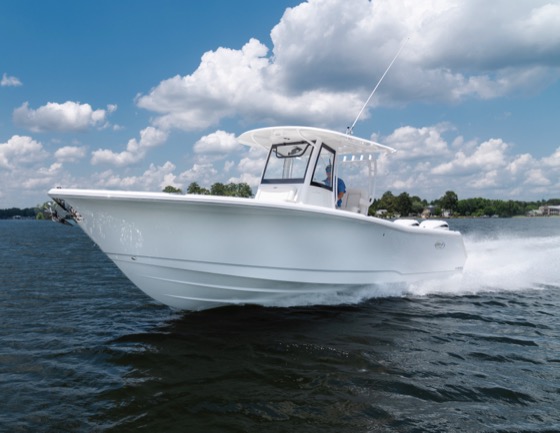
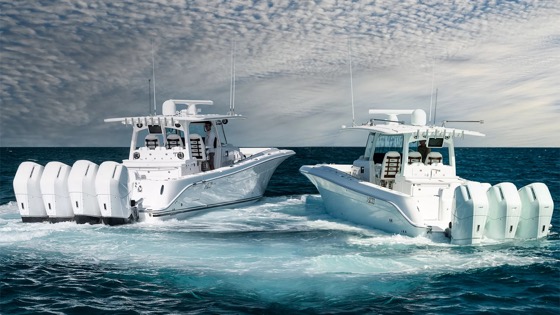
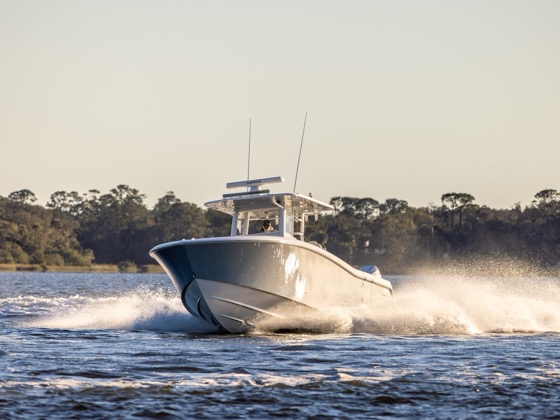
I presented my inventory platform to the CEO of Warbird, parent company of Invincible and Yellowfin Boats. He commissioned it for the manufacturer, where it runs their inventory in production today.
I'm the Creative Systems Director at Waterside Group, a holdings company with 25+ businesses across marine, hospitality, real estate, construction, and recreation. I created this role. AI adoption was not a function here until I made the case for it, and I have led it end to end since October 2025.
I sit with our sales, accounting, construction, marketing, and HR teams and build the tools they use every day: LLM assistants, AI agents, knowledge bases, and internal platforms. I build the first version myself, in Claude Code and against the Claude API, then scale what works through the 12-engineer team I manage, with the permissions, safeguards, and cost visibility to ship generative AI responsibly to people who are not engineers.
I came to it from design. I joined as a marketing intern building logos and brand identities for the businesses the group was acquiring, and I still start every project the same way a designer does: with the person who has to use the product, not the spec. That is most of why the adoption work lands.
How I Lead AI Adoption
Almost everyone I build for is non-technical. Bartenders, boat salespeople, accountants, project managers, marketing coordinators. None of them asked for AI, and none of them care what model is behind it. They care whether the thing in front of them makes their day easier. That is the whole problem, and it is mostly not a technical one.
Sit with the department until I understand the work, not the org chart
Map how the job actually gets done, including the workarounds nobody documents
Ship AI only where it earns its keep, and plain software everywhere else
Train the people who use it, in their words, on their screens
Measure it, and turn off what does not pay
The pattern I keep coming back to: put the tool where the person already is. A bartender at one of our restaurants is not going to open a CRM, but they will tap three fields on a phone when a guest mentions they are shopping for a boat. Salespeople were not going to maintain a spreadsheet back at the office, but they will use an app on the dock that already knows the inventory. The adoption problem is usually a placement problem.
The second pattern is keeping people in the loop where their judgment is worth more than the model's. When staff upload a spreadsheet of leads, Claude proposes the column mapping and a person confirms it. The email tool drafts and previews but never sends on its own. Financial workflows keep human review. Those gates are not hedging, they are what makes people willing to use the thing at all.
Then I train and hand it off. I run onboarding and mentorship for our Northeastern co-op engineers for the same reason: the goal is internal capability, not a dependency on me.
How I Take Feedback
I build the complaint box into the product. Every platform I ship has a feedback route: an Ideas & Feedback board and a direct Questions for Leadership channel in the Waterside App, a Submit Feedback item in the Warbird admin. Staff have filed 72 ideas through the board and 49 of them are shipped and closed. That ratio is the point. A feedback channel nobody acts on teaches people to stop using it.
The harder version is taking the answer you did not want. I built an agentic lead pipeline that worked: 2,907 runs between April and July 2026 discovered 3,941 leads and qualified 783 of them. Then that same run history made the unit economics legible, and the cost per qualified lead came back too high to justify. I shut it off in July and commissioned a cost model before it goes back on. Killing something I had built and was proud of was the right call, and knowing when to do that is part of leading adoption rather than just shipping it.
Read from the production databases, August 2026.
Selected AI & Platform Work




Before I built software for these businesses, I built their brands. I designed these identities and wrote the standards that keep them consistent, and both now live inside the Waterside App so a manager can pull the right logo without calling me. Most of the swatches below are read straight from those records; a couple of these brands are not in the app yet, and theirs come from the live sites.

Newport Creamery
Ice cream and restaurant brand, established 1928
- Newport Blue, #003057
- Stripes Blue, #003865
- Newport Gold, #F1BF48

Flying Bridge Restaurant
Waterfront restaurant, Falmouth Harbor
- Dark Blue, #003057
- Red, #D50032
- White, #ffffff

Flying Bridge Marina
Marina and service center
- Dark Blue, #003057
- Accent Blue, #51C8EC
- White, #ffffff

Timber Wood Fired
Wood-fired restaurant
- Deep Crimson, #76232F
- Beige, #E2D9C2
- White, #ffffff
Basecamp Brewing
Brewery and taproom
- Regal Blue, #2d4d73
- Golden Yellow, #e8c46c
- White, #ffffff
Bluebird Martini Bar
Cocktail bar
- Steel Blue, #768692
- Cream, #D6D2C4
- Slate Grey, #485457

The Shop at South Peak
Retail at the South Peak resort
- Primary Grey, #485565
- Beige, #E2D9C2
Snowfish Sushi
Sushi restaurant
- Navy, #042F47
Creative Systems Director · Waterside Group
Oct 2025 - Present · Boston, MA- Lead AI rollout across the portfolio: sit with each department, earn their trust, map how work actually gets done, ship AI where it earns its keep, then train the teams who use it.
- Manage a 12-engineer team building across the portfolio, and run onboarding & mentorship for Northeastern co-op software engineers, growing internal AI capability, not just internal tools.
- Shipped 3 production LLM assistants used daily by non-engineering staff: a dealership ops assistant (Q&A over live inventory & financials, AI listing backfill), a company-wide RAG assistant over group knowledge, and a semantic-search sales chat.
- Built an AI-agent CRM (Agentic Portal): configurable agents, automation engine, DOCX/PDF/CSV knowledge-base ingestion, and run-history observability for cost and behavior tracking on every agent execution.
- Set the portfolio's rules for AI use (role-based permissions, Postgres row-level security, human-in-the-loop review on financial workflows) and advise leadership on tool evaluation, cost, and risk.
- Replaced legacy spreadsheet pipelines with governed, purpose-built software; for example, migrating field sales apps off Excel/SharePoint onto a typed, permissioned Supabase backend.
Lead Graphic Designer · Waterside Group
May 2024 - Oct 2025 · Falmouth, MA- Shaped visual identity and marketing strategy across the group's real estate, lifestyle, and entertainment brands while beginning the internal-tools buildout: shipped the first dealership operations platform and its native SwiftUI iOS companion, introducing AI-assisted workflows to a non-technical sales team.
Marketing Associate · Waterside Group
May 2023 - May 2024 · Falmouth, MA- Drove marketing execution and content across the portfolio; firsthand exposure to the manual workflows I later replaced with software.
Marketing Intern · Waterside Group (Longfellow Design Build)
May 2022 - May 2023 · Falmouth, MA- Joined as the group began acquiring businesses: created logos, brand graphics, and launch creative for incoming companies, plus social and campaign content.
Earlier: Media Production Intern, PBS, Boston (2019)